Exposed to the Elements: The Dangers of Nickel Mining
ByNickel mining is environmentally harmful in three ways:
- the mining process itself results in deforestation, habitat loss, and soil erosion
- the refining process results in air and water pollution
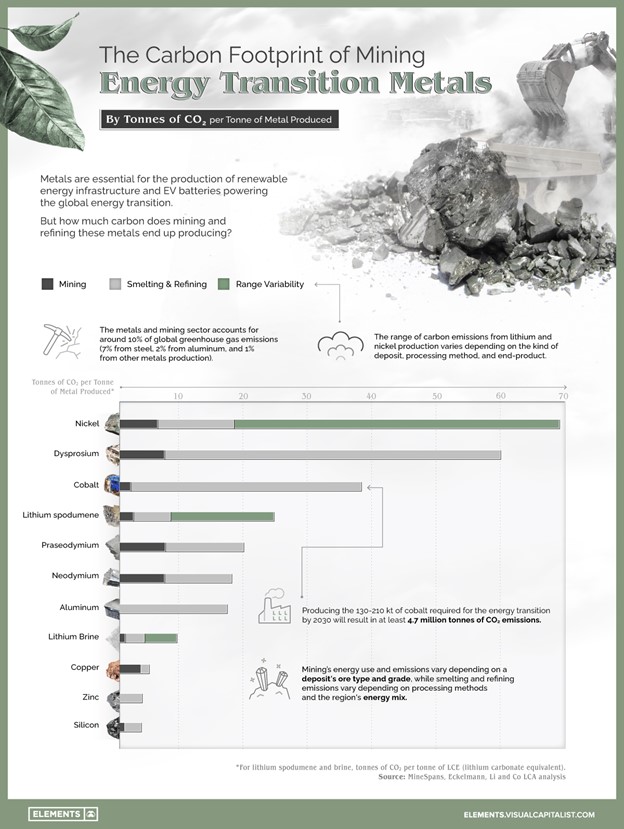
- the overall process of nickel mining and refining results in high energy consumption with correspondingly high CO2 emissions (Wang, 2023)
In countries like Indonesia, where the nickel is found in nickel laterite, the primary issue is the actual mining because nickel laterite is found close to the surface and is excavated in large open pit mines. On the other hand, Canada’s nickel is found in nickel sulfide, mostly deep underground. Here the real problems occur during the refining process. Both countries, see a large carbon footprint created by nickel mining and refining.
To further look at the ecological issues surrounding Nickel Mining, I am going to look at several elements involved in the issue: nickel, sulfur, carbon, and oxygen.
Nickel
Nickel is a hard, ductile, silvery-white lustrous metal with symbol Ni and atomic number 28. Interestingly, it is one of only four elements that is ferromagnetic at room temperature. It often used in the production of stainless steel, batteries, and other industrial applications (Tuovinen et al., 2010). Although Nickel has no known nutritional value for humans, it is an essential nutrient for certain animals, microorganisms, and plants. Too much exposure to nickel can be carcinogenic in humans and lead to phytotoxicity in plants (Khoshgoftarmanesh et al., 2018).
Sulfur
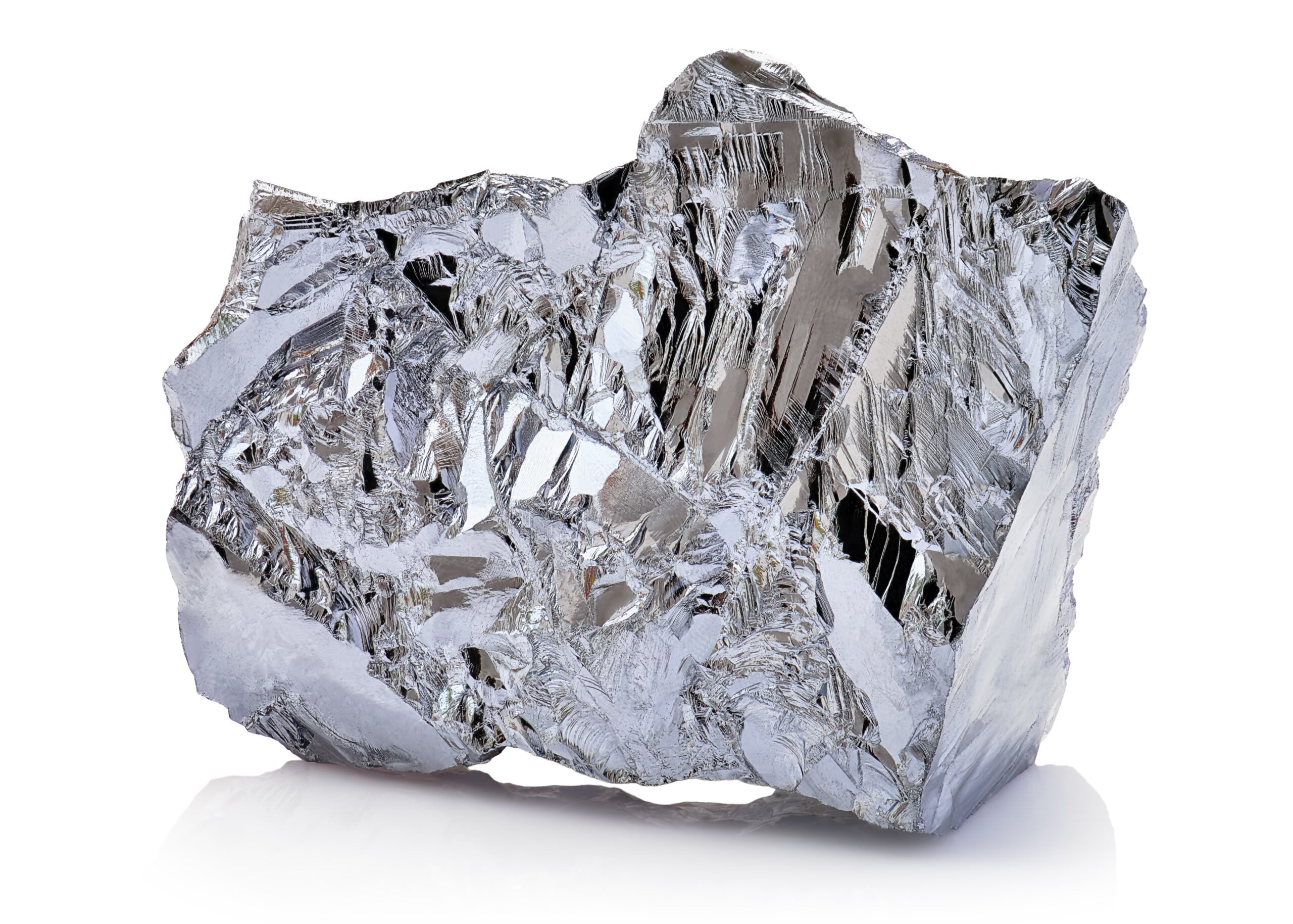
Sulfur is a yellow, non-metallic chemical element with atomic number 16 and symbol S. It the fifth most abundant element on Earth and is essential for life (amino acids, for example, are an organosulfur compound (Brosnan, 2006)). Sulfur is used in many industries such as production of sulfuric acid, matches, insecticides, and fungicides. Sulfur easily combines with oxygen to form sulfur dioxide (SO2) which is known to cause acid rain and air pollution.
Nickel sulfide includes up to 30% sulfur and 4 tons of SO2 can be released in the extraction of 1 ton of nickel (World Bank, 1998). To operate in the government’s strict guidelines, Canadian companies use oxygen-deficient gas in their furnaces to prevent the creation of sulfur dioxide and capture much of the sulfur and turn it into sulfuric acid (Glencore, 2019).
Carbon Carbon is a chemical element with the symbol C and the atomic number 6. It is a non-metallic element and is the fourth most abundant element in the universe by mass. Carbon is essential for life, as it is a key component of all known life forms, including carbohydrates, proteins, nucleic acids, and fats. Carbon has a wide range of industrial applications, including its use in the production of steel, which is the most widely used metal in the world. Carbon, like sulfur, is a major contributor to global warming and climate change when combined with oxygen to form carbon dioxide (CO2).
(Conte Graphic, 2022)
Carbon dioxide is released a very large amounts when using heavy machines to excavate. There are at least 15 kilograms of carbon dioxide released into the atmosphere for every one kilogram with nickel mined (Conte Graphic, 2022).
Oxygen
Oxygen, a gas, is a non-metallic element with the symbol O and the atomic number 8. Oxygen is a critical element for life on Earth, and its availability in the atmosphere is necessary to sustain many forms of life, including humans. However, when oxygen mixes with sulfur or carbon, it can create sulfur dioxide or carbon dioxide, both of which are harmful to the environment as explained above.
References:
Brosnan, J. T. (2006, June). The sulfur-containing amino acids: An overview. The Journal of nutrition. Retrieved April 29, 2023, from https://pubmed.ncbi.nlm.nih.gov/16702333
Conte Graphic, N. (2022, November 1). The carbon emissions of Producing Energy Transition Metals: Charted. Elements by Visual Capitalist. Retrieved April 29, 2023, from https://elements.visualcapitalist.com/the-carbon-emissions-of-producing-energy-transition-metals-charted/
Glencore. (2019, November 14). Towards cleaner air: How we monitor and reduce our emissions. Glencore. Retrieved February 23, 2023, from https://www.glencore.com/media-and-insights/insights/towards-cleaner-air
Jones, M. (2022, March 24). Russia, nickel and the global impact on the mining sector. Mining Technology. Retrieved May 5, 2023, from https://www.mining-technology.com/sponsored/russia-nickel-and-the-global-impact-on-the-mining-sector/
Khoshgoftarmanesh, A. H., Kazemi, N., Kasprzak, K. S., Kamran, M. A., Kabala, K., Harish, Ghaderian, S. M., Gerendás, J., Fourati, E., Ermler, U., Denkhaus, E., Dalir, N., Carlson, R. W., Bal, W., Baccouch, S., Ahmad, M. S., Agrawal, B., Ahmad, M. S. A., Alam, M. M., … Cataldo, D. A. (2018, October 13). Nickel; whether toxic or essential for plants and environment – A Review. Plant Physiology and Biochemistry. Retrieved April 29, 2023, from https://www.sciencedirect.com/science/article/abs/pii/S0981942818304522
Tuovinen, J.-P., Tsoskounoglou, M., Robitaille, J.-F., Rautio, P., Perkins, P. E., Paton, G. I., Norseth, T., Mudd, G. M., Mamuse, A., Hylander, L. D., Hoatson, D. M., Glaister, B. J., Eckelman, M. J., Dudka, S., Crawford, G. A., Boyd, R., Adamo, P., Ali, S. H., Barlow, A. E., … Howard-White, F. B. (2010, June 1). Global trends and environmental issues in nickel mining: Sulfides versus laterites. Ore Geology Reviews. Retrieved April 29, 2023, from https://www.sciencedirect.com/science/article/abs/pii/S0169136810000569?via%3Dihub
Wang, F. (2023, January 1). An integrated process of CO2 mineralization and selective nickel and cobalt recovery from olivine and laterites. ScienceDirect. Retrieved April 29, 2023, from https://www.sciencedirect.com/science/article/abs/pii/S1385894722044813